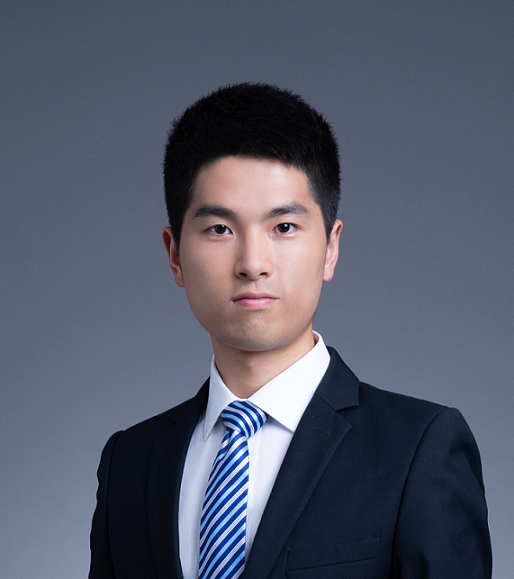
Junle Liu
ABOUT ME
Hi, there. Dr.Junle LIU earned his Ph.D. degree from Hong Kong University of Science and Technology (HKUST) at the Wind Engineering and Building Aerodynamics (WEBA) group and his Bachelor’s degree from Harbin Institute of Technology Shenzhen, at Artificial Intelligence for Wind Engineering lab. His supervisors are Prof.Tim K.T. Tse and Prof.Gang Hu.
Dr Liu, from May 2025, joined KTH FLOW Center as a postdoc research fellow supervised by Stefan Wallin focusing on ERC ROSAS project, and his research topics are centered on DRL and wall modelling.
In his past research journey, he has been concentrating on AI-aided aerodynamics and data-driven techniques in experimental fluid mechanics and numerical simulation. As of now, Dr.Liu has published papers covering AI-enhanced fluid mechanics, experimental fluid mechanics, and reduced-order modelling techniques in aerodynamics.
Some recent research interests of Dr.Liu:
- Wind Engineeirng: Experimental, Numerical, and Data-Driven perspectives;
- Reinforcement Learning for flow control and UAV/drone optimization (low-attitude aerodynamics);
- AI for Fluid Engineering: prediction, reconstruction, and control;
- Atmosphere aerodynamics
Dr.Liu welcomes any kind of academic and industrial collaborations. If you are interested in integrating AI techniques with engineering practices, please feel free to drop an email or send an instant message.
Latest News
**[2026 July] **New collaboration paper in Physcis of Fludis out: Explainable machine learning-enhanced aerodynamic characteristic analysis of bluff bodies under interference effects
- Topic: Investigate the two tandem building interference effects with XML methods;
- Method: CFD, XML, SHAP, Uncertainity quantification;
**[2026 July] **New collaboration paper in Building And Environment out: POD-FNO for efficient and interpretable prediction of turbulent flow around bluff bodies
- Topic: Develop and evaluate AI algorithms for turbulent flow prediction in interferrence zone;
- Method: an interpretable POD-FNO method;
- Findings: interpretable AI can predict turbulent features and understand physical information.
**[2026 May] **New Projects Awarded [SMARTRAIL: AI-based rail cable crack detection] supported by NAISS, collaborated with William Liu
- Topic: Develop VLA tools for railway cable crack detection;
- Method: Vision-based models, VLA models, physical interpretations;
- Findings: Ongoing.
**[2026 Apr] **New Projects Awarded [PhyGeo-World: A Physics- and Geometry-Consistent World Model for Embodied AI] supported by NAISS
- Topic: Develop GeoAI model for physical world;
- Method: LLM, Diffusion;
- Findings: Ongoing.
**[2026 Jan] **New collaboration paper in Energy out: Wind energy potential of a novel green building design: Three connected high-rise buildings with Y-plan layout
- Topic: Estimate the wind energy potential in the urban city;
- Method: Numerical-experiments cross-validation;
- Findings: Installing wind turbines in urban city buildings can harvest a great amount of wind energy.
**[2025 Dec] **New paper in Physics of Fluids out: Spatiotemporal wall pressure forecast of a rectangular cylinder with physics-aware DeepU-Fourier neural network
- Topic: Estimate the physics-aware Neural Network in spatiotemporal wall pressure prediction;
- Method: Wind tunnel testing, physics-aware AI development, statistical and physical interpretations;
- Findings: Embedding physics in AI greatly enhances performance and improves extrapolation capability.
**[2025 Nov] **New Conference paper in NeurIPS UrbanAI workshop accepted: PresCast: Physics-Constrained Fourier Kolmogorov-Arnold Networks for Bluff Bodies Spatiotemporal Wall Pressure Forecast
- Topic: Estimate the wind-induced pressure on a single building facade safety;
- Method: Physics-aware KAN, wind tunnel testing;
- Findings: AI can short-term forecast on wind-induced pressure to reduce disasters/risks, enhancing building safety.
**[2025 Nov] **New Collaborative Conference paper in NeurIPS UrbanAI workshop accepted: Multi-fidelity Data Reconstruction for Wind Pressure on Building
- Topic: Estimate the wind-induced pressure information in urban city-scale;
- Method: Neural Networks, data-fusion, numerical simulation;
- Findings: AI can reconstruct the urban city-scale building facade pressure via data-fusion.